Monocouche and K-Rend Explained: Costs, Colours, Lifespan and When to Choose It
Thinking about a fresh, through-colour façade before the busy season? Monocouche and K-Rend are popular choices for homeowners who want a crisp finish without ongoing repainting. They promise strong weather performance, a wide palette of colours, and distinctive textures that suit both modern and traditional homes.
This guide explains what monocouche and K-Rend are, how they differ from silicone thincoat systems, what they cost, how long they last, and the realities around cleaning and patch repairs. You will also find practical tips for North West properties and when it makes sense to choose one system over another.
If you are weighing up options, book a free on-site survey with Rendplas Ltd for tailored colour guidance and a fixed written quotation.
What Monocouche and K-Rend Actually Are
Monocouche is a cement-based, through-colour render. The pigment runs right through the material, so the colour is not just a surface coat. K-Rend is one of the leading monocouche brands and a household name in the UK. Many people say K-Rend when they mean monocouche. In practice, K-Rend monocouche is a specific, tested system with its own base coats, beads, and detailing guidance.
Monocouche is typically applied in two passes to a total thickness of around 15–18mm, then finished as a scraped texture once it has picked up. That thickness helps it span minor imperfections, gives good impact resistance, and delivers a solid, stone-like aesthetic.
Scraped vs Float Textures
Scraped Finish
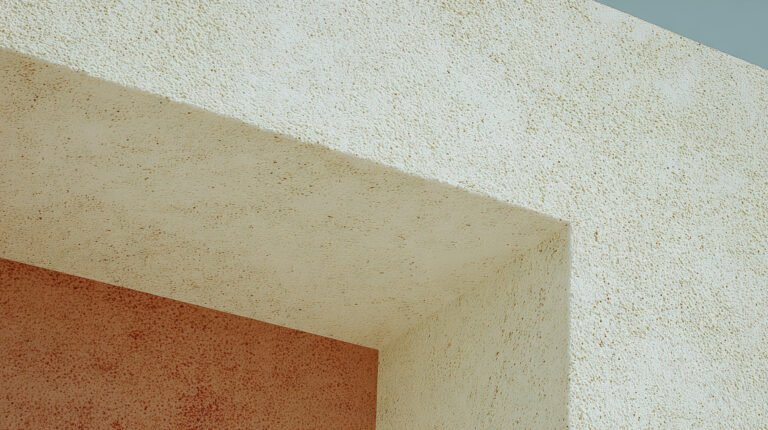
The most common monocouche look. Once the render has cured to the right stage, the surface is scraped back to expose a uniform, slightly open texture. It hides minor substrate blemishes and delivers the classic K-Rend appearance.
Float or Sponge Finish
Less common with monocouche because the mix is designed for scraping. Where a flatter look is desired, silicone thincoat systems are usually preferred to achieve a fine, modern texture at a thinner build.
If you want precise edges and crisp lines, careful beadwork and clean reveals make all the difference. On site, we set corners, movement joints, and window beads so the final scrape reads as one even plane across elevations.
Colour Stability and Popular Shades
Because monocouche is through-colour, light knocks do not reveal a grey base. UV-stable pigments help colours hold up well over time. In Lancashire we often see demand for clean, timeless tones such as Antique White and Ash White in K-Rend’s palette. They sit nicely against red brick, stone details, and modern window frames.
For homeowners who prefer a very fine, contemporary texture, silicone thincoat in Off White or Limestone White can be an excellent alternative. The visual difference is subtle from the street, but the hand-feel and texture are finer.
Performance in North West Weather
Lancashire and the wider North West deal with frequent rain, wind, and changeable temperatures. Monocouche stands up well thanks to its thickness and weather-resistant formulation. It sheds water effectively once fully cured, and the scraped texture helps mask minor grime between gentle cleans.
Silicone thincoat has a different performance profile. It is thinner, more flexible, and highly water-repellent, so it sheds water quickly and remains very breathable. That flexibility often reduces the likelihood of hairline cracking on movement-prone substrates. If your property is exposed to driving rain or has a complex mix of backgrounds, silicone thincoat can be the safer specification.
Monocouche vs Silicone Thincoat: How to Choose
Think of monocouche as a robust, stone-like finish with a classic scraped texture, and silicone thincoat as a sleek, flexible skin with low-maintenance demands.
- Breathability and flexibility: Silicone thincoat systems are typically more flexible and breathable, helping them cope with minor building movement.
- Thickness: Monocouche is thicker, providing a solid feel, strong impact resistance, and the ability to even out small undulations.
- Detailing: Both systems rely on quality beads, movement joints, and careful sealing around windows and copings.
- Crack resistance: No render is crack-proof, but silicone thincoat generally has the advantage on movement resistance.
Rendplas installs both systems and will recommend what best suits your walls, exposure, and design goals.
Lifespan Expectations
With good preparation and detailing, monocouche renders typically offer long service lives. Many systems are supported by 10–25 year guarantees when installed to specification, and practical lifespans can extend beyond that with light care.
Silicone thincoat delivers comparable longevity, often with even lower maintenance because of its water-shedding finish and UV-stable colour.
Exact performance depends on substrate condition, exposure, and the quality of installation. During a survey, we assess these factors before advising on expected service life.
Patch Repairs and Blending
Can monocouche be patched? Yes, but seamless colour matching is the challenge. Because monocouche is through-colour and cures in situ, a fresh mix placed beside an older elevation can read slightly different under certain light.
Skilled installers can minimise this by cutting back at natural breaks, feathering, and matching batch codes. Small, well-planned patches can blend acceptably, but a full elevation reskim is the most invisible option.
Silicone thincoat patches often blend more readily because colour is factory-controlled and the texture is fine, but edges and priming must be handled carefully.
Cleaning Dos and Don’ts
Do
- Use low-pressure rinsing and soft brushes for general grime and algae.
- Consider a gentle biocide where organic growth is persistent, following manufacturer guidance.
- Keep gutters, copings, and flashings sound so dirty run-off does not streak the finish.
Don't
- Use harsh jet washing close to the surface.
- Use abrasive pads that could scuff scraped textures or polish thincoat finishes.
Ask during your survey for site-specific cleaning advice so you preserve the texture and colour integrity.
What Affects Monocouche Cost per m²
Every property is different. The main drivers of cost include:
- Measured surface area and number of elevations
- Scaffolding requirements, height, and roofline complexity
- Beads, movement joints, window reveals, and feature details
- Access constraints, protection, and site logistics
- Substrate preparation and repairs
- Machine application versus hand application
Monocouche is often competitive for large, simple elevations where machine application speeds things up. Silicone thincoat can be similar in cost once you account for basecoat, mesh, and finish.
For an accurate figure, book a free site visit. We provide a fixed, written quotation after assessment, including colour and texture guidance.
Photo Ideas to Help You Decide
- A north-facing elevation in a light colour after one winter
- Close-ups of scraped versus silicone thincoat textures beside window reveals
- Examples of Antique White or Ash White on semi-detached homes
- Recent installs in your area so you can view finishes in similar light
Quick FAQs
How much does monocouche rendering cost?
Prices vary with area, access, scaffolding, beads and reveals, substrate preparation, and whether machine application is possible. A free on-site survey is the only reliable way to get a fixed m² rate.
What is the lifespan of monocouche render?
Installed correctly, you can expect a long service life, often supported by 10–25 year system guarantees.
Is monocouche the same as K-Rend?
Monocouche is the render type. K-Rend is a leading monocouche brand and system. The terms are often used interchangeably.
What is better, monocouche or silicone render?
It depends on the substrate and goals. Monocouche gives a thick, stone-like scraped look, while silicone thincoat is thinner, more flexible, and highly water-repellent.
Can monocouche render be patched?
Yes, but perfect colour matching can be difficult. Skilled blending and cutting to natural breaks help achieve the best result.
Ready for a Tailored Recommendation?
Rendplas Ltd installs K-Rend monocouche and silicone thincoat systems across Lancashire.
If you are comparing finishes for a home in Preston, you can learn more about external rendering options and local K-Rend services here: K-Rend Through-Colour Systems in Preston and Surrounding Areas .
For homeowners considering a flexible thincoat alternative, read more about: Silicone Rendering Options and Finishes .
Book your free on-site survey today for a fixed written quotation and friendly colour guidance. We will assess your property, explain the pros and cons for your walls and the local climate, and help you choose a finish that looks great for years.